
» left917 · eyes on the sky
Worth the Look
The High Country has some of the darkest skies in the East. Here's what's worth stepping outside and looking up for: meteor showers, full moons, eclipses, and the occasional aurora watch. We flag the nights the sky is actually worth a look, and tell you where to aim.
Celestial calendar · updated Oct 3, 9:19 AM ET
★ left917 recommends
The nights we'd step outside for.
🪐
Now through Oct 19
Planets
Selfie at Vera Rubin Ridge
★ why look upOn sol 1943 of its journey of exploration across the surface of Mars, the Curiosity Rover recorded this selfie at the south rim of Vera Rubin Ridge. Of course a sol is a Martian solar day, about 40 minutes longer than an Earth day. - left917
On sol 1943 of its journey of exploration across the surface of Mars, the Curiosity Rover recorded this selfie at the south rim of Vera Rubin Ridge. Of course a sol is a Martian solar day, about 40 minutes longer than an Earth day.
Oct 2026
★
Wed, Oct 21
Meteor shower · after midnight
Orionids meteor shower
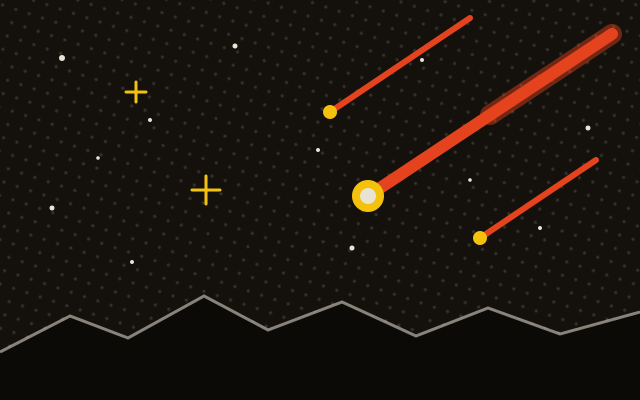
~20/hr, fast and bright. Look toward the southeast after midnight. Moon that night: 71% lit, a bright moon washes out the faint ones.
more about this →
🌕
Mon, Oct 26
Full moon · rises at sunset, up all night
Full Moon — the Hunter's Moon
Nov 2026
★
Tue, Nov 17
Meteor shower · the hours before dawn
Leonids meteor shower
~15/hr, famously fast. Look toward the east the hours before dawn. Moon that night: 46% lit, a half-lit moon, so the dimmest streaks hide.
more about this →
🌕
Tue, Nov 24
Full moon · rises at sunset, up all night
Full Moon — the Beaver Moon
Dec 2026
★
Mon, Dec 14
Meteor shower · all evening
Geminids meteor shower
~120/hr, the best shower of the year. Look toward nearly overhead all evening. Moon that night: 22% lit, dark skies, ideal.
more about this →
★
Tue, Dec 22
Meteor shower · before dawn
Ursids meteor shower
~10/hr, a quiet holiday shower. Look toward the north before dawn. Moon that night: 93% lit, a bright moon washes out the faint ones.
more about this →
🌕
Wed, Dec 23
Full moon · rises at sunset, up all night
Full Moon — the Cold Moon
Jan 2027
★
Sun, Jan 3
Meteor shower · after midnight
Quadrantids meteor shower
Up to ~40/hr in a short, sharp peak. Look toward the northeast after midnight. Moon that night: 27% lit, a half-lit moon, so the dimmest streaks hide.
more about this →
Nothing here. Loosen the filters.
Meteor showers, moon phases, and aurora watches are computed from published astronomical data
and NOAA space-weather forecasts. Aurora this far south is rare and never guaranteed. Skies
change fast, so always step out and see for yourself.